
Technology has made our lives faster, more convenient, and more flexible than ever before, giving us access to tools that simplify everyday tasks, improve communication, and allow us to work more efficiently. Yet, despite all these advances and the time they are supposed to save us, many people find themselves increasingly overwhelmed, constantly connected, and struggling to maintain a reasonable balance between their professional and personal lives.
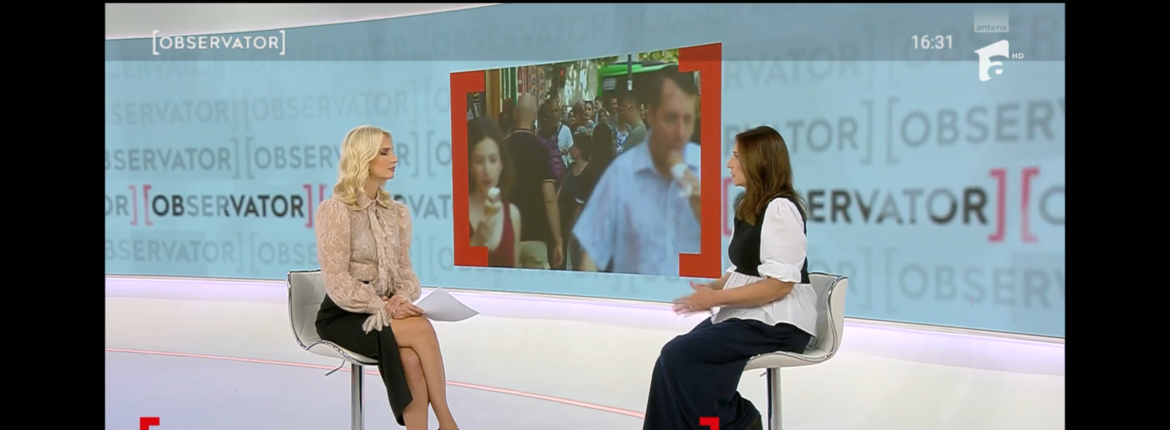
Our Managing Partner, Alexandra Ene, was recently invited to Antena 1's Observator to discuss this paradox of modern working life and the growing challenges surrounding work-life balance.
The conversation focused primarily on the importance of establishing boundaries between professional and personal life, particularly when it comes to responding to emails, calls, and messages outside working hours. While there will always be situations that require flexibility or immediate attention, receiving a work-related message in the evening should not automatically create an obligation to respond. However, the discussion goes beyond communication outside working hours, raising broader questions about how technology has changed our expectations, why we increasingly associate being busy with being successful, and whether the efficiency we have gained is actually translating into a better quality of life.
The productivity paradox: We save time, only to fill it with more work
Over the past decades, technology has fundamentally changed the way we work, allowing us to complete in minutes tasks that once required hours, communicate instantly with colleagues and clients around the world, and access almost any information with very little effort. More recently, artificial intelligence has accelerated this transformation even further, helping us automate repetitive activities, analyse information, and complete certain tasks considerably faster than before.
In theory, these improvements should allow us to spend less time working or at least free up more time for activities that require creativity, judgement, and human interaction. In practice, however, much of the time we save seems to be immediately absorbed by additional responsibilities, more meetings, tighter deadlines, and growing expectations regarding how quickly we should respond or deliver results.
We have gained speed, but not necessarily more time for ourselves.
Artificial intelligence has the potential to take this paradox even further, and the real question is whether organisations will use the efficiency gains to create more sustainable ways of working or simply to raise expectations even further. Ultimately, the impact of technology on our working lives will depend not only on what these tools make possible, but also on how we choose to organise work.
The always-on culture: When does the working day really end?
One of the most significant changes brought about by digital technology is the gradual disappearance of clear boundaries between professional and personal life. Emails, messaging applications, and mobile phones make it possible for work to follow us almost everywhere, and even when we choose not to respond to messages outside working hours, we may continue thinking about unfinished tasks, upcoming deadlines, or problems that need to be addressed the following day.
According to Eurofound's 2023 report, Right to disconnect: Implementation and impact at company level, more than 80% of the employees surveyed reported receiving work-related communications outside their contractual working hours during a typical week. The findings illustrate how easily professional availability can become an implicit expectation, even when nobody has formally required employees to remain connected outside their working hours.
This is particularly relevant in international organisations, where colleagues and clients frequently operate across different time zones. Someone working in another country may send an email during their normal business hours, without necessarily expecting an immediate answer from a colleague whose working day has already ended. The fact that a message has been sent does not, in itself, create an obligation to respond immediately.
Of course, different industries and professional roles come with different responsibilities, and there will always be situations in which genuine emergencies require immediate attention. What matters is establishing clear expectations rather than allowing permanent availability to become an unwritten rule.
Work-life balance is about more than working hours
When discussing work-life balance, we often focus on the number of hours people spend at work or whether they have flexible schedules. However, the intensity of work, constant interruptions, competing priorities, and growing volume of information we are expected to process can be just as exhausting as long working hours.
There is also an important difference between being physically away from work and being mentally disconnected from it. We may close our laptops at the end of the day while continuing to think about professional responsibilities, and by the time we are finally free, we may no longer have the energy to enjoy our personal lives.
Flexibility can certainly help, particularly by reducing commuting time and allowing people to organise their responsibilities more easily, but its real value depends on the autonomy employees have over their schedules and whether their personal time is respected. Being able to work from anywhere should not automatically mean being expected to work at any time.
At the same time, improving work-life balance cannot be the responsibility of employees alone. Individuals can establish boundaries and communicate their availability, but organisations also need to examine workloads, clarify priorities, and avoid rewarding constant availability as a sign of commitment. Performance and overwork are not synonymous, and being permanently busy does not necessarily mean being productive.
Have we forgotten how to do nothing?
Perhaps one of the more interesting aspects of modern exhaustion is that our tendency to remain constantly occupied does not necessarily end when we finish working.
We have become so accustomed to making efficient use of our time that we often apply the same approach to our personal lives, turning even our free time into something that needs to be planned and used productively. We feel that we should exercise, read, travel, socialise, develop new skills, and make the most of every available moment, while even short breaks are often filled with checking messages, reading the news, or scrolling through social media.
After spending most of the working day in front of a screen, we frequently turn to another screen to relax, moving from one source of information and stimulation to another. While these activities can certainly be enjoyable, they do not always provide the mental distance or sense of recovery we may need after an already demanding day.
Perhaps we have become so focused on making the most of our time that we have gradually lost some of our ability to simply enjoy it, without feeling the need to accomplish anything in particular.
Towards a more sustainable way of working and living
Technological progress has brought extraordinary improvements to our professional and personal lives, and the objective should certainly not be to reject these advances or romanticise the past. The challenge is to ensure that the benefits of progress translate into better working conditions and a higher quality of life, rather than simply creating new expectations that absorb every minute we manage to save.
For organisations, this requires a more thoughtful approach to productivity, one that values results without automatically equating performance with constant availability or excessive working hours. For individuals, it may involve establishing clearer boundaries, becoming more conscious of how we spend our attention, and accepting that rest does not need to be justified by how much we have accomplished beforehand.
Having free time in our calendars is not enough if we no longer have the energy, peace of mind, or mental availability to enjoy it.
Perhaps the next stage of progress should be measured not only by how much more we can accomplish in a day, but also by how much time and energy we manage to preserve for the rest of our lives.