Categorii
Corporate

Why Executive Search fails and how to get it right

Executive search is not just recruitment at a higher level

Executive search is often perceived as a premium version of recruitment. In reality, it is a fundamentally different process. When executive search fails, it is rarely because of a lack of candidates in the market, it fails because the process is misunderstood, rushed, or poorly executed.

Senior leadership hires carry strategic, cultural, and financial consequences. A failed search can delay growth, damage internal trust, and cost significantly more than anticipated.

Below are the most common reasons executive search fails and what companies can do differently to get it right.

1. The role is not clearly defined

One of the most frequent causes of failure is an unclear or unrealistic role definition. Companies often start a search with a job title, not a success profile.

Common issues include:

  • Misalignment between stakeholders on expectations

  • Overloaded roles combining multiple senior responsibilities

  • Confusion between operational delivery and strategic leadership

Without clarity on what success looks like in 12–24 months, even strong candidates may fail.

How to get it right: A successful executive search process starts with deep discovery: business context, strategy, leadership gaps, and cultural dynamics, not just a job description.

2. The search relies too heavily on CVs and past titles

Senior candidates are often evaluated primarily on experience, brand names, or previous job titles. While relevant experience matters, it is not a reliable predictor of future performance.

Executive roles require:

  • Decision-making under pressure

  • Leadership adaptability

  • Cultural and values alignment

A strong CV does not guarantee effectiveness in a new environment.

How to get it right: Use structured interviews and leadership assessments to evaluate how candidates think, lead, and perform, not just where they have worked.

3. The process is rushed due to business pressure

Leadership vacancies create urgency. However, compressing the executive search process often leads to compromises that are costly in the long term.

Rushed searches typically result in:

  • Limited market mapping

  • Over-reliance on “available” candidates

  • Insufficient assessment and referencing

Speed replaces rigor and risk increases.

How to get it right: A disciplined timeline with clear milestones ensures both efficiency and quality. Executive search should move with focus, not haste.

4. Confidentiality is not properly managed

Executive candidates are often employed, visible, and cautious. A lack of discretion can damage both the candidate’s reputation and the client’s employer brand.

Poor confidentiality leads to:

  • Candidate withdrawals

  • Market noise

  • Reduced access to top passive talent

How to get it right: A professional executive search process prioritizes discretion, controlled outreach, and transparent communication with all parties involved.

5. Cultural fit is underestimated

Many leadership hires fail not because of competence, but because of cultural misalignment. Culture influences decision-making, collaboration, and leadership acceptance.

Ignoring culture results in:

  • Internal resistance

  • Low engagement

  • Early exits despite strong performance

How to get it right: Assess values, leadership style, and behavioral drivers alongside technical competence. Cultural alignment should be evaluated intentionally, not assumed.

6. There is no post-placement follow-up

Executive search does not end with an accepted offer. The first months are critical for integration, credibility, and performance.

Without follow-up:

  • Early warning signs are missed

  • Misalignment escalates silently

  • Retention risk increases

How to get it right: Post-placement check-ins support both the executive and the organization, increasing long-term success and stability.

Getting executive search right

A successful executive search is structured, insight-driven, and human-centered. It balances market knowledge with rigorous assessment and close collaboration between client and consultant.

Organizations that get executive search right:

  • Hire leaders who perform, not just impress

  • Reduce long-term hiring risk

  • Build stronger leadership teams

Executive search fails when it is treated as a transaction. It succeeds when it is treated as a strategic partnership.

If your organization is preparing for a critical leadership hire, investing in the right process from the beginning can make the difference between short-term relief and long-term impact.

Considering an executive or senior leadership hire?
A confidential discussion with an experienced consultant can help clarify your approach and reduce hiring risk.

Contact us: https://pfpadvisory.com/contact/ 

Categorii
Corporate

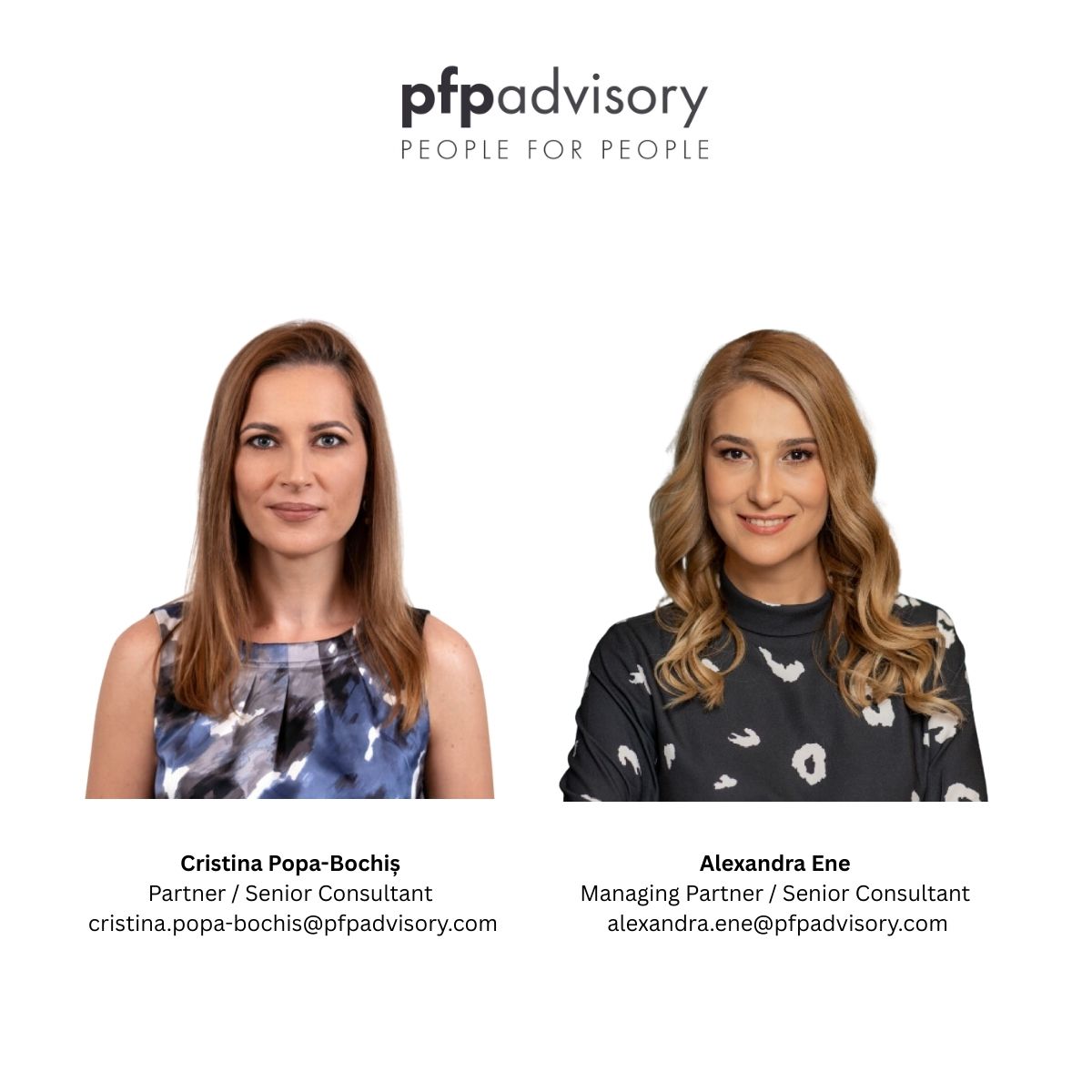
Cristina Popa-Bochis joins PFP Advisory as Partner

We are getting the year started with a special announcement: Cristina Popa-Bochis is joining PFP Advisory as Partner.

With over 20 years of experience, she is one of the most experienced Executive Search consultants in the Industrial sector in Romania. A CIPD graduate and Hogan certified professional, she brings deep expertise across Industrial & Manufacturing, Automotive, Renewables, and related sectors, having successfully managed executive and senior-level searches for both operational and support functions across the CEE region.

Beyond her impressive professional background, this partnership is especially meaningful as Cristina and Alexandra Ene, the founder of PFP Advisory, have worked together before, building a relationship grounded in mutual respect, trust, and shared values. We are genuinely excited to be collaborating again and to combine our experience for the benefit of our clients and candidates.

Together, we will continue to deliver exceptional executive search, recruitment, and assessment services, supporting organizations with impactful talent solutions.

Categorii
Corporate

POV: Când promovarea devine risc

Un profesionist bun nu va fi neapărat și un manager bun. Și nu pentru că nu ar avea potențial sau “stofă”, ci pentru că vorbim despre două joburi complet diferite, pentru care este nevoie de abilități diferite.

Am văzut de multe ori oameni excepționali în rolurile lor tehnice sau de expertiză, promovați în poziții de management unde au dat chix. Nu din lipsă de bună-voință sau implicare, ci, cred eu, din lipsă de pregătire, sprijin și claritate. Trecerea de la “a face tu” la “a-i ajuta pe alții să facă” este o schimbare profundă de rol, mentalitate și responsabilitate.

Mai ales când vorbim despre 1st time managers, tranziția este una dintre cele mai sensibile etape din carieră. Și, din păcate, una prea des neglijată de organizații. Sunt aruncați într-un nou context și lăsați “să se descurce”, ceea ce reprezintă o strategie scumpă, atât pentru companii, cât și pentru oameni.

De ce se întâmplă asta? Pentru că uneori funcționează o logică înșelătoare: „Dacă e cel mai bun din echipă, sigur va conduce bine echipa.” A pornit din aceeași poziție cu colegii, înțelege bine ce este de făcut și cum se fac lucrurile, ce ar putea merge rău? În realitate însă, abilitățile de top performer nu sunt aceleași cu cele de people manager.

Cum să reduci rata eșecului

Câteva direcții pe care le vedem constant în proiectele noastre de executive search și management recruitment:

  • Clarificarea rolului înainte de promovare. Transparența și comunicarea previn promovările „forțate” și eșecurile previzibile. Decizia de a transforma un specialist în manager ar trebui privită cu aceeași rigoare ca un proces de recrutare. Câteva întrebări ar putea fi:
  • Dorește cu adevărat această persoană să fie manager sau presupunem noi?
  • Are disponibilitate și motivație pentru un rol centrat pe oameni, nu pe execuție?
  • A demonstrat deja comportamente specifice leadershipului (colaborare, influență, empatie, capacitate de prioritizare)?
  • Este pregătit(ă) să renunțe la o parte din „a face” în favoarea „a conduce”?
  • Ce riscuri apar dacă promovăm prea devreme? Dar dacă amânăm?

Aceste întrebări nu sunt un „test”, ci o radiografie necesară înainte de orice pas în leadership.

  1. Un program minim de onboarding în rolul de manager. Nu e suficient un „felicitări, de azi ești șef!”. E nevoie de ghidaj în: managementul oamenilor, comunicare, feedback dificil, prioritizare, delegare, gestionarea conflictelor.
  2. Mentorat sau shadowing în primele 90 de zile. Primele luni sunt critice, iar un manager la început de drum are nevoie de cineva care să-i arate nu doar cesă facă, ci și de ce, are nevoie de un partener de învățare, nu doar de KPI-uri.
  3. Feedback constant, nu doar la finalul anului. Managementul este o abilitate care se ajustează din mers, prin urmare un check-in periodic poate preveni derapaje majore și creează siguranță psihologică.
  4. Separarea traseelor de creștere: expert vs. manager. Nu toată lumea vrea să devină manager, unii vor să rămână specialiști. Cei din urmă ar trebui să poată crește în senioritate fără să fie împinși spre management, iar un traseu dedicat experților reduce presiunea promovărilor „de formă” și crește retenția.

Leadershipul nu vine „la pachet” cu performanța individuală și nu se întâmplă spontan, ci se învață, se cultivă și se antrenează. Iar organizațiile care înțeleg asta nu doar păstrează performerii, ci și formează manageri capabili, implicați și pregătiți să susțină echipe, nu doar rezultate.


Acest articol a apărut prima dată pe LinkedIn , scris de Alexandra Ene

Categorii
Corporate

Culture change requires personal change

Why transforming an organization always starts with its leaders

Organizational culture has become one of the most frequently discussed topics in boardrooms, leadership off-sites, and strategic planning sessions. Executives increasingly recognize that culture is not a soft element of business, but a hard driver of performance, influencing everything from innovation and retention to customer experience and shareholder value.

Yet despite this awareness, most culture transformation initiatives fail. Sometimes, because the strategy was flawed, other times the consultants were not up to the task, and sometimes, because employees resisted the change.

But culture change fails many times for one core reason: Leaders expect the organization to transform without transforming themselves.

This is the uncomfortable but powerful truth at the heart of cultural transformation: Culture change requires personal change. If leaders don’t shift, the organization can’t.

As an executive search and leadership advisory partner, we see this pattern across industries and across levels. The organizations that succeed in reshaping their culture are the ones with leaders willing to model the change – in their decisions, in their communication, and in their behavior – even when it’s inconvenient.

This article explores why personal change is the cornerstone of culture change, how leaders can identify the shifts they must make, and what high-impact organizations do differently to accelerate transformation from the top.

  1. Why is culture the reflection of leadership behavior

Culture is often understood as a set of values, statements, or beliefs. In reality, culture = behaviors people repeat because leaders reward, tolerate, or model them.

Your employees don’t follow the posters on the wall. They follow what leaders actually do, especially under pressure. If leaders say they want innovation but punish risk-taking, the culture becomes cautious. If leaders say collaboration matters but operate in silos, the culture fragments. If leaders say accountability is key but fail to address underperformance, the culture becomes complacent.

This is the leadership mirror effect. Organizations behave like their leaders.

  • A reactive leader creates a reactive culture.
  • A decisive leader creates a decisive culture.
  • A fearful leader creates a culture of hesitation.
  • A courageous leader creates a culture of ownership.

Employees don’t copy leadership speeches; they copy leadership habits. That’s why the fastest way to influence culture is to examine what leaders are doing that might unintentionally contradict the desired culture.

  1. You cannot delegate culture

One of the core leadership misconceptions is that culture can be assigned to HR, internal communications, or a “culture task force.” While these functions can support and enable change, they cannot lead it.

Culture is not a project, it’s a leadership practice. Culture is shaped most directly by the conversations leaders choose to have and the ones they avoid, the behaviors leaders reward and the ones they tolerate, the decisions leaders make when trade-offs arise, and the standards leaders uphold consistently.

This is why leadership alignment is often more important than employee engagement during transformation. When the leadership team isn’t living the change, employees see the gap immediately and the credibility of the change collapses.

  1. Your personal blind spots become organizational barriers

Every leader possesses strengths and blind spots. Strengths often help leaders rise through the ranks, but those same strengths can become liabilities in higher-stakes leadership roles.

For example:

  • A leader whose strength is operational excellence may become overly controlling, unintentionally stifling innovation.
  • A leader known for diplomacy may avoid difficult conversations, unintentionally lowering performance standards.
  • A leader celebrated for speed may move too fast, unintentionally causing organizational whiplash.

The cultural ripple effect. Whatever patterns exist in leadership behavior will inevitably scale across the organization.

  • If a leadership team lacks cross-functional communication, silos will emerge across the business.
  • If the C-suite struggles with accountability, middle management will adopt the same approach.
  • If executives send mixed signals, employees will operate with confusion and distrust.

That is why the most transformative question leaders can ask during culture change is: “How is my behavior contributing to the culture we currently have?”

And just as importantly: “How must my behavior evolve to create the culture we want?”

  1. Personal change builds trust, credibility, and alignment

In any culture transformation, employees are watching closely. They’re not looking for perfection, they’re looking for authenticity and consistency.

When leaders publicly commit to personal change, it accelerates organizational adoption in three ways:

  1. It builds trust. Employees trust leaders who are willing to acknowledge where they need to grow. It signals humility and credibility – two powerful cultural accelerators.
  2. It creates permission. When leaders model vulnerability (“Here’s what I’m working on”), employees feel safer embracing their own growth and behavioral shifts.
  3. It reduces resistance. Most resistance to change comes from fear that “this is just another initiative that leadership won’t really buy into.” When leaders demonstrate change, resistance turns into alignment.
  4. The role of executive search in culture transformation

As an executive search firm, we see a defining insight emerge again and again: The leaders you hire determine the culture you create.

Even the best strategy or transformation roadmap will fail if the leadership team does not have the mindset, adaptability, and emotional intelligence to support cultural change.

Organizations that successfully transform their culture typically invest in three areas:

  • Hiring leaders whose behaviors match the desired culture. This requires more than assessing technical expertise – it requires evaluating leadership style, communication patterns, decision-making behaviors, and emotional intelligence.
  • Developing current leaders to close culture-critical gaps. This might include executive coaching, leadership assessments, and targeted behavioral interventions.
  • Re-aligning incentives, performance measures, and expectations. Culture won’t change if leadership is measured and rewarded for behaviors that contradict the new direction.

Culture change cannot occur in isolation from leadership selection and development. The two are inseparable.

  1. The five personal shifts leaders must make to drive culture change

While every organization’s journey is unique, five leadership shifts consistently drive successful culture transformation:

Shift 1: From managing activities to modeling behaviors

Leadership is no longer about monitoring tasks, it’s about embodying the values and behaviors you want to see. Leaders must become visible examples of the culture they’re creating.

Ask yourself: Am I living the culture I expect from my team?

Shift 2: From communication to transparency

Employees don’t need perfectly polished messages; they need honest, consistent insight into decision-making. Transparency builds trust – and trust accelerates change.

Ask yourself: What am I not saying that my team needs to hear?

Shift 3: From control to empowerment

Culture thrives when people feel trusted and empowered. Leaders must shift from command-and-control behaviors to high-clarity, high-accountability empowerment.

Ask yourself: Where can I give more ownership and trust?

Shift 4: From speed to intention

High-performing cultures are not built through speed; they’re built through intentionality in terms of decisions, conversations, and priorities.

Ask yourself: Am I moving fast or moving with purpose?

Shift 5: From avoidance to courage

Culture erodes when leaders avoid hard conversations or tolerate misalignment. Courageous leadership sets the tone for a high-performance culture.

Ask yourself: What conversation am I avoiding that is holding our culture back?

  1. How leaders can begin their personal culture transformation

Culture change starts with an honest leadership audit. These five steps help leaders identify where personal and collective behavior needs to shift.

Step 1: Define the culture you want

Be crystal clear: What behaviors define the culture you’re trying to build? What behaviors contradict it?

Step 2: Identify personal gaps

Courageous leaders ask: What am I currently doing that reinforces the old culture?

This step requires honest reflection or external assessment.

Step 3: Choose one behavior to change first

Leaders often attempt too many personal shifts at once, diluting impact. Culture change begins with one meaningful change practiced consistently.

Step 4: Communicate your commitment

Tell your team what you’re working on. Show your human side. Create accountability.

Step 5: Reinforce through action, not intention

Culture change is recognized through repeated action, not promises or mission statements.

The quickest way to accelerate cultural transformation is repetition – visible, consistent behavioral shifts from leadership.

  1. What high-performing organizations get right about culture change

Across industries, the organizations that succeed with culture transformation embrace six leadership principles:

  1. Leaders go first. Change is leader-led, not HR-led.
  2. Alignment is more important than agreement. Not everyone has to like the direction, but everyone must commit to it.
  3. Culture is built through behaviors, not slogans. What leaders do matters more than what leaders say.
  4. Accountability is non-negotiable. Leaders hold themselves and each other to the cultural standard.
  5. Transparency builds momentum. Employees can handle truth; they cannot handle ambiguity.
  6. Personal change is part of the job description. The most effective leaders see personal evolution as a leadership responsibility – not an optional activity.
  1. Culture change is a leadership journey, not an event

One of the biggest mistakes organizations make is treating culture as a short-term initiative. Culture is a continuous leadership responsibility.

The true sign of cultural transformation is when:

  • Leaders model the behaviors daily
  • Employees feel empowered and accountable
  • Communication becomes clearer, faster, and more transparent
  • Decision-making aligns with purpose and strategy
  • People trust that the culture is real, not performative

This work never ends – and that’s why it must start with leadership.

  1. Final thought: culture will not rise above the level of leadership

If you want a culture of accountability, you must model accountability.
If you want a culture of collaboration, you must model collaboration.
If you want a culture of innovation, you must model curiosity and courage.

And if you want a culture of high performance, you must model the behaviors that drive high performance – consistently, visibly, and authentically.

Culture change requires personal change.
When leaders evolve, organizations transform.
And when organizations transform, performance accelerates.

Categorii
Corporate

POV: Când candidații spun “nu”

Coșmarul Consultantului de executive search: totul merge bine în procesul de recrutare, candidatul pare foarte potrivit și entuziasmat, și dintr-o dată… se retrage.

În spatele fiecărui “nu” există însă o poveste. Uneori primesc o ofertă mai bună, de la altă companie sau angajatorul curent. Alteori, procesul e prea lung sau prea complex, comunicarea e greoaie, sau apare un red flag pe parcursul interviurilor.

Greșelile sau confuziile în procesul de recrutare pot descuraja candidații sau pot duce la decalaje semnificative. De exemplu, întârzieri în programarea interviurilor, întrebări nepotrivite sau lipsa clarității despre rol sau pașii următori.

Candidații se pot răzgândi și pentru că au dat curs unor discuții dar de fapt nu vor să schimbe jobul sau își dau seama că nu rezonează cu compania / echipa cu care sunt în proces de recrutare. Alții renunță după ce primesc feedback negativ despre companie de la foști sau actuali angajați sau citesc recenzii negative online și nu vor să riște.

Dar de cele mai multe ori, motivul real este lipsa unei conexiuni autentice între candidat și companie. Recrutarea nu e doar evaluare, e și relație. Și dacă relația nu e bine construită, dacă nu se acordă importanță și acestui aspect, oricât de bună ar fi oferta, candidatul va fi pe muchie și lucrurile se pot strica în orice moment.

Cum poți evita pierderea candidaților valoroși
  • Simplifică procesul de selecție și oferă un calendar clar al etapelor.

  • Comunică transparent, chiar și atunci când nu ai vești imediate.

  • Oferă feedback constructiv și prompt.

  • Pune accent pe experiența candidatului, nu doar pe evaluare.

  • Fii atent la ton, empatie și respect în fiecare interacțiune.

Dacă vrei să optimizezi procesele de recrutare și să construiești o experiență de candidat pozitivă, bazată pe încredere și autenticitate: https://pfpadvisory.com/contact/


Acest articol a apărut prima dată pe LinkedIn , scris de Alexandra Ene

Categorii
Corporate

Balancing experience and potential in management recruitment

Decoding Talent Acquisition: Balancing experience and potential when recruiting a manager is a nuanced process that depends on the specific needs and goals of your organization. Here’s a breakdown of both perspectives:

Experience:
  • Proven Track Record: Experienced managers have background in handling various challenges, making them equipped to manage different situations more effectively. Encountering and resolving various issues in past roles equips senior candidates with problem-solving skills that can be applied to new situations. This can save time and resources when dealing with complex issues.
  • Immediate Impact: They often require less training and can contribute to the organization’s goals more quickly due to their familiarity with similar roles. They can often hit the ground running, being a what we call a “plug & play” profile.
  • Risk Reduction: Their experience can mean high-quality work and more appropriate decisions, reducing the potential for costly mistakes and allowing them to provide guidance to their team based on past experiences.
  • Reduced Learning Curve: Learning curves are inherent to any new role. However, experienced candidates often have a shorter learning curve, allowing them to adapt to new processes and technologies more swiftly.
  • Mentorship Potential: Experienced employees can serve as mentors to less experienced team members. They can provide guidance, share insights, and contribute to the growth and development of the team, facilitating knowledge transfer within the organization. Furthermore, having experienced mentors can help retain top talent, as employees value opportunities for growth and learning. When new hires see that the organization invests in their development by providing access to experienced mentors, they’re more likely to feel engaged and motivated to contribute effectively.
  • Client and Stakeholder Relations: In roles that involve interacting with clients and stakeholders, experienced candidates are more likely to have established relationships and a better understanding of client needs.
  • Leadership and Decision-Making: In managerial roles, experience often leads to better decision-making and effective leadership. Experienced managers can draw on past experiences to guide their teams and drive results.
  • Crisis Management: When unexpected challenges arise, experienced professionals tend to remain calm and composed, drawing from their past experiences to manage crises effectively.
  • Industry Insights: Experienced candidates bring insights about industry trends, competition, and market dynamics that can be invaluable in shaping business strategies.
  • Confidence and Poise: Another advantage of recruiting a person with experience is the confidence and poise they bring to their role. Seniority often equips individuals with a sense of assurance in their abilities. Having faced and overcome various challenges in their career, experienced professionals tend to approach new tasks and responsibilities with a level of self-assuredness. This confidence can have a positive impact on their performance, decision-making, and interactions with colleagues, clients, and stakeholders.

However, past performance does no guarantee future performance, which is why high potential candidates should still be in the run.

Potential:
  • Fresh Perspectives: Individuals with less experience, unburdened by preconceived notions, often bring to the table creative thinking, original viewpoints and innovative ideas that can challenge the status quo. This encourages a culture of continuous improvement and fosters a mindset of innovation which can drive the organization to explore new opportunities.
  • Adaptability: Potential-driven managers tend to be more open to learning and adapting to changing contexts, which is essential in today’s rapidly evolving business landscape. Their proactive approach to evolving circumstances can lead to the organization remaining responsive and resilient.
  • Long-Term Investment: By identifying and nurturing high-potential individuals, organizations make a strategic investment in their future top leadership pipeline. These candidates possess qualities that can be developed over time, aligning with the organization’s growth trajectory and long-term vision.
  • Eagerness to Learn: High-potential candidates are typically eager to learn and take on new challenges. Their curiosity can lead to continuous improvement and a culture of ongoing development.
  • Energy and Enthusiasm: Their enthusiasm and passion can be contagious, boosting team morale and motivation, and fostering a positive work environment. Thus, they could have an impact on team spirit, elevating engagement levels, and cultivating an atmosphere where challenges are seen as exciting opportunities to excel.
  • Resilience: High-potential candidates often exhibit a high level of determination and resilience, enabling them to bounce back from setbacks and persevere in the face of challenges.
  • Diverse Skill Sets: These candidates may come from various backgrounds, bringing miscellaneous skill sets that can complement and enrich the existing team’s capabilities. Their distinctive capabilitities could bring fresh dimensions to problem-solving and decision-making, driving well-rounded outcomes.
  • Leadership Potential: Even if they’re not stepping into a top role immediately, high-potential candidates often display leadership qualities that can be nurtured and developed over time.
  • Cultural Fit: Being relatively new to the organization, these candidates are more likely to embrace and embody the company’s culture, making integration smoother.
  • Retention and Engagement: Organizations that invest in high-potential individuals demonstrate a commitment to employee growth and development, which can lead to increased job satisfaction, engagement, and retention.
Finding the Balance:
  • Context Matters: Consider the specific role, team, and company goals. For critical positions requiring immediate results, experience might be prioritized. For roles with room for growth and innovation, potential could be more valuable.
  • Hybrid Approach: Look for candidates who offer a blend of both. Someone with a strong foundation of experience combined with a demonstrated hunger to learn and grow can be a valuable asset.
  • Assessment Tools: Utilize assessment tools, psychometric tests, competency-based interviews, simulations, and scenario-based assessments to gauge a candidate’s ability to handle real-world situations, regardless of experience.
  • Investment in Development: If you lean towards potential, ensure you have a solid plan for mentoring, training, and guiding the manager to meet your organization’s expectations.


In essence, the best approach is to prioritize what aligns with your organization’s immediate and long-term needs. Remember that each recruitment scenario is unique. Therefore, carefully evaluating candidates based on your organization’s circumstances and culture will yield the best outcome.