Categorii
Candidates Corporate

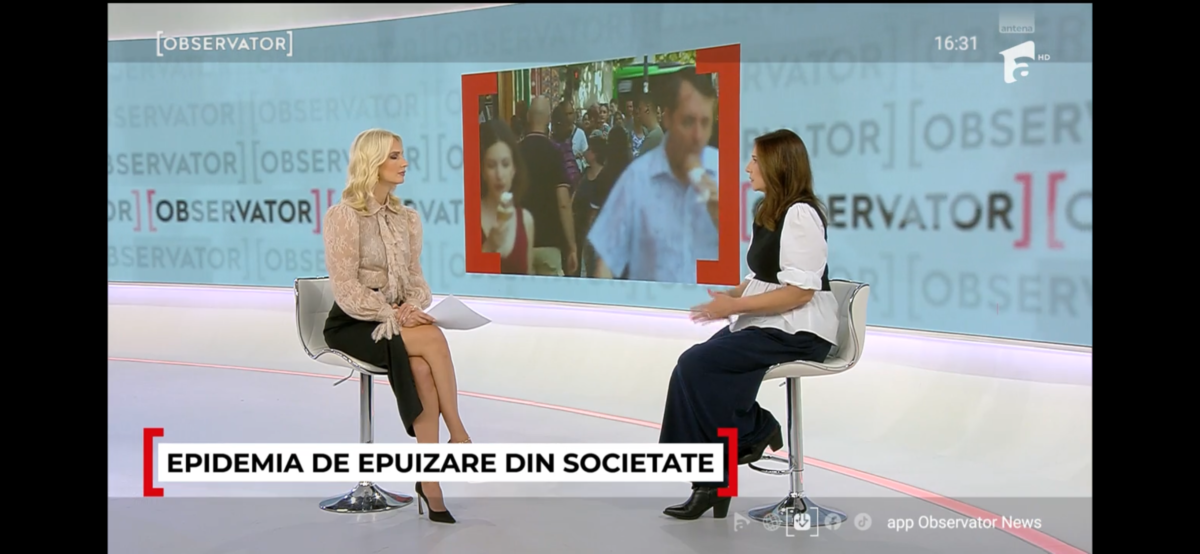
NEWS: Alexandra Ene interview OBSERVATOR ANTENA 1

Technology has made our lives faster, more convenient, and more flexible than ever before, giving us access to tools that simplify everyday tasks, improve communication, and allow us to work more efficiently. Yet, despite all these advances and the time they are supposed to save us, many people find themselves increasingly overwhelmed, constantly connected, and struggling to maintain a reasonable balance between their professional and personal lives.

Our Managing Partner, Alexandra Ene, was recently invited to Antena 1’s Observator to discuss this paradox of modern working life and the growing challenges surrounding work-life balance.

The conversation focused primarily on the importance of establishing boundaries between professional and personal life, particularly when it comes to responding to emails, calls, and messages outside working hours. While there will always be situations that require flexibility or immediate attention, receiving a work-related message in the evening should not automatically create an obligation to respond. However, the discussion goes beyond communication outside working hours, raising broader questions about how technology has changed our expectations, why we increasingly associate being busy with being successful, and whether the efficiency we have gained is actually translating into a better quality of life.

The productivity paradox: We save time, only to fill it with more work

Over the past decades, technology has fundamentally changed the way we work, allowing us to complete in minutes tasks that once required hours, communicate instantly with colleagues and clients around the world, and access almost any information with very little effort. More recently, artificial intelligence has accelerated this transformation even further, helping us automate repetitive activities, analyse information, and complete certain tasks considerably faster than before.

In theory, these improvements should allow us to spend less time working or at least free up more time for activities that require creativity, judgement, and human interaction. In practice, however, much of the time we save seems to be immediately absorbed by additional responsibilities, more meetings, tighter deadlines, and growing expectations regarding how quickly we should respond or deliver results.

We have gained speed, but not necessarily more time for ourselves.

Artificial intelligence has the potential to take this paradox even further, and the real question is whether organisations will use the efficiency gains to create more sustainable ways of working or simply to raise expectations even further. Ultimately, the impact of technology on our working lives will depend not only on what these tools make possible, but also on how we choose to organise work.

The always-on culture: When does the working day really end?

One of the most significant changes brought about by digital technology is the gradual disappearance of clear boundaries between professional and personal life. Emails, messaging applications, and mobile phones make it possible for work to follow us almost everywhere, and even when we choose not to respond to messages outside working hours, we may continue thinking about unfinished tasks, upcoming deadlines, or problems that need to be addressed the following day.

According to Eurofound’s 2023 report, Right to disconnect: Implementation and impact at company level, more than 80% of the employees surveyed reported receiving work-related communications outside their contractual working hours during a typical week. The findings illustrate how easily professional availability can become an implicit expectation, even when nobody has formally required employees to remain connected outside their working hours.

This is particularly relevant in international organisations, where colleagues and clients frequently operate across different time zones. Someone working in another country may send an email during their normal business hours, without necessarily expecting an immediate answer from a colleague whose working day has already ended. The fact that a message has been sent does not, in itself, create an obligation to respond immediately.

Of course, different industries and professional roles come with different responsibilities, and there will always be situations in which genuine emergencies require immediate attention. What matters is establishing clear expectations rather than allowing permanent availability to become an unwritten rule.

Work-life balance is about more than working hours

When discussing work-life balance, we often focus on the number of hours people spend at work or whether they have flexible schedules. However, the intensity of work, constant interruptions, competing priorities, and growing volume of information we are expected to process can be just as exhausting as long working hours.

There is also an important difference between being physically away from work and being mentally disconnected from it. We may close our laptops at the end of the day while continuing to think about professional responsibilities, and by the time we are finally free, we may no longer have the energy to enjoy our personal lives.

Flexibility can certainly help, particularly by reducing commuting time and allowing people to organise their responsibilities more easily, but its real value depends on the autonomy employees have over their schedules and whether their personal time is respected. Being able to work from anywhere should not automatically mean being expected to work at any time.

At the same time, improving work-life balance cannot be the responsibility of employees alone. Individuals can establish boundaries and communicate their availability, but organisations also need to examine workloads, clarify priorities, and avoid rewarding constant availability as a sign of commitment. Performance and overwork are not synonymous, and being permanently busy does not necessarily mean being productive.

Have we forgotten how to do nothing?

Perhaps one of the more interesting aspects of modern exhaustion is that our tendency to remain constantly occupied does not necessarily end when we finish working.

We have become so accustomed to making efficient use of our time that we often apply the same approach to our personal lives, turning even our free time into something that needs to be planned and used productively. We feel that we should exercise, read, travel, socialise, develop new skills, and make the most of every available moment, while even short breaks are often filled with checking messages, reading the news, or scrolling through social media.

After spending most of the working day in front of a screen, we frequently turn to another screen to relax, moving from one source of information and stimulation to another. While these activities can certainly be enjoyable, they do not always provide the mental distance or sense of recovery we may need after an already demanding day.

Perhaps we have become so focused on making the most of our time that we have gradually lost some of our ability to simply enjoy it, without feeling the need to accomplish anything in particular.

Towards a more sustainable way of working and living

Technological progress has brought extraordinary improvements to our professional and personal lives, and the objective should certainly not be to reject these advances or romanticise the past. The challenge is to ensure that the benefits of progress translate into better working conditions and a higher quality of life, rather than simply creating new expectations that absorb every minute we manage to save.

For organisations, this requires a more thoughtful approach to productivity, one that values results without automatically equating performance with constant availability or excessive working hours. For individuals, it may involve establishing clearer boundaries, becoming more conscious of how we spend our attention, and accepting that rest does not need to be justified by how much we have accomplished beforehand.

Having free time in our calendars is not enough if we no longer have the energy, peace of mind, or mental availability to enjoy it.

Perhaps the next stage of progress should be measured not only by how much more we can accomplish in a day, but also by how much time and energy we manage to preserve for the rest of our lives.

Categorii
Candidates

POV: Recomandări pentru candidați

Sunt activă în recrutarea de poziții de top și middle management de aproape 10 ani și văd anumite greșeli care se repetă. Câteva recomandări pentru candidați, din situații pe care le întâlnesc destul de des:

– Salvați și trimiteți CV-ul cu numele vostru, nu „CV final”, „CV nou” sau „CV 2026”. Preferabil în .pdf, dar fără parolă sau blocat, ca să poată fi deschis și copiat ușor.
– Adresa de email de pe care trimiteți să fie profesională (fără pisicutza@ sau contul vecinului) și setați numele de afișare astfel încât să conțină numele vostru. Dacă v-ați schimbat numele după căsătorie, verificați dacă adresa mai poate fi asociată cu voi.
– Datele de contact să fie actualizate și ușor de găsit.
– Titlurile rolurilor să fie clare, nu doar denumiri interne din companie. Un mare plus când adăugați și industria în care activează companiile, nu avem cum să cunoaștem toți angajatorii din piață.
– Scrieți emailurile simplu și natural, în limba în care ați purta și o conversație cu persoana respectivă. Limba engleză este într-adevăr mai folosită în JD-uri și CV-uri, dar un mesaj sau email de la un român către un român nu are de ce să fie în altă limbă.
– Pe cât posibil, recomand să nu trimiteți texte generate integral de AI. Se recunosc și au început să sune toate la fel. Folosiți-l ca ajutor, dacă e cazul, dar lăsați mesajul să fie al vostru.
– LinkedIn-ul să fie actualizat și în linie cu CV-ul. Atenție ca perioadele de angajare să fie corecte și consecvente între platforme, neconcordanțele ridică semne de întrebare.
– Aplicați la roluri care au o legătură rezonabilă cu experiența voastră. Nu trebuie să bifați 100% din cerințe, dar când vedeți subliniat că o anumită experiență / competență este esențială pentru rol, țineți cont de acest lucru.
– Citiți descrierea rolului (și a companiei angajatoare, dacă o cunoașteți) înainte de interviu.
– Dacă ați confirmat un interviu și nu mai puteți ajunge, anunțați.
– Nu trimiteți același mesaj generic către 20 de recrutori, mai ales dacă suntem toți în TO sau CC 🫠.


Acest text a fost postat pe profilul de LinkedIn al Alexandrei Ene, Managing Partner PFP Advisory.

Categorii
Candidates Corporate

POV: Observații despre leadership din executive search

În ultimii ani, unul dintre lucrurile pe care le observ tot mai des la liderii foarte buni este că au devenit mult mai puțin preocupați să pară că au toate răspunsurile. Pun întrebări mai bune, cer feedback real, își schimbă opinia când apar informații noi, recunosc mai ușor când ceva nu funcționează, vorbesc onest (și) despre greșelile pe care le-au făcut.

Și, poate cel mai important, nu mai construiesc organizații dependente de ei.

Liderii care performează bine în perioade complicate nu sunt cei care conduc prin presiune, control sau urgență permanentă, ci cei care reușesc să păstreze claritate, prioritizare și un anumit echilibru în organizație chiar și în momente mai dificile.

În recrutare, diferența asta o vedem între cei care vor să pară că lucrurile nu le scapă niciodată de sub control și vor să conducă fiecare conversație, și cei vorbesc despre cum au construit echipe și structuri menite să funcționeze sănătos și fără prezența lor constantă.

Cred că leadershipul modern seamănă mai puțin cu imaginea clasică a „omului care știe și face tot” și mai mult cu capacitatea de a adapta, de a învăța, de a crește oameni și de a păstra organizația funcțională într-un context care se schimbă permanent.

Postare publicată de Alexandra Ene pe LinkedIn.

Categorii
Candidates Corporate

POV: The curious case of Alexandra Ene

The curious case of Alexandra Ene. Sau cum tinerețea e, uneori, irosită pe tineri.

Ca în filmul „The Curious Case of Benjamin Button”, am senzația că profesional am pornit pe dos. Acum 10-15 ani, aveam senzația că știu tot, că sunt educată și într-o poziție bună, aveam opinii ferme, concluzii rapide și un răspuns pentru fiecare situație. Certitudinea venea ușor.

Pe măsură ce „îmbătrânesc” însă, după ani de lucru cu CEOs, antreprenori și lideri care m-au expus la diferite situații, îmi este mult mai clar cât de limitată poate fi propria perspectivă și cât de mult filtrează experiențele, succesul și propriile convingeri modul în care interpretăm realitatea.

Și, sincer, văd asta ca pe un progres. Siguranța de la început venea, probabil, din necunoașterea complexității, poate un bias cognitiv de tipul Dunning-Kruger. Este foarte periculos când nu știi ce nu știi. Acum însă, cu anii de experiență în spate care mi-au arătat că viața nu este în alb și negru, am altă disponibilitate să țin ochii, urechile și mintea deschise.

Nu mă tem să spun „nu știu”, dar mi-e groază de autosuficiență; când ai senzația că nu mai ai nimic de învățat ești gata. Cred că evoluția nu este despre a avea toate răspunsurile, ci despre:

  • a pune întrebările potrivite
  • a rămâne curios
  • a-ți suspenda propriile concluzii
  • a face loc pentru perspective care te contrazic

„Keeping an open mind” nu e un slogan frumos, ci o competență critică, mai ales într-o lume în care schimbarea depășește constant experiența acumulată.

În executive search, văd zilnic diferența dintre liderii care cred că știu și cei care știu că mai au de învățat, între cei care cred că au răspunsurile și cei care continuă să pună întrebări. Primii se blochează, iar cei din urmă cresc și dezvoltă organizațiile odată cu ei.

Postare apărută pe pagina de LinkedIn a Alexandrei Ene.

Citește mai mult despre experiența noastră în exevutive search aici – https://pfpadvisory.com/about/ 

Categorii
Candidates Corporate

Fake it ‘till you make it? Or learn it ‘till you earn it.

“Fake it ‘till you make it.” That’s what they say. That you should jump into the opportunity, smile with confidence, and figure it out later.

And to be fair, there’s some truth in that advice. Few of us ever feel completely ready for the next big step. Growth almost always involves discomfort, a little uncertainty, a little stretching, and a lot of courage. Opportunities don’t wait for perfect timing, and trains shouldn’t be missed just because you haven’t memorized the map. Momentum always matters.

But there’s a fine line between confidence and illusion, projection, or arrogance. Between boldness and bluffing.

At PFP Advisory, we see this often in the world of executive search. Candidates who project confidence can open doors, but those who back it up with substance, skill, and self-awareness are the ones who stay in the room, thrive in the role, and grow the business.

That’s why we believe in a slightly different mantra: Learn it ‘till you earn it. It’s about preparation meeting opportunity.

Why this matters now

 For years, “fake it ‘till you make it” was celebrated as a confidence hack, a way to push past imposter syndrome and seize opportunity. And in some cases, it worked.

But today’s leadership environment is different. Boards, investors, and teams are operating in an era of constant scrutiny, data transparency, and cultural accountability. Every decision, every statement, every blind spot can be seen and felt faster than ever before.

In this world, faking it doesn’t last long. What lasts is credibility.

Leaders who thrive today are those who admit what they don’t know, who learn fast, and who surround themselves with people who make them better. Authenticity has become not just a personal virtue, but a business advantage.

From “Fake it” to “Learn it”: what leaders can do

  1. Stay curious.

True leaders don’t assume expertise; they pursue it. They read, ask questions, seek mentors, and explore what they don’t understand, without ego. Curiosity keeps you relevant in a market that evolves daily.

  1. Ask for feedback early and often.

Self-awareness isn’t a weakness. It’s strength. The willingness to ask, “How can I be better?” signals maturity and growth potential. Teams trust leaders who listen.

  1. Mentor and be mentored.

No one learns in isolation. The best executives invest in both teaching and being taught. They share insights, seek guidance, and model what lifelong learning looks like.

  1. Build depth, not just polish.

Presentation gets attention, but depth earns respect. Whether it’s mastering financial literacy, emotional intelligence, or new technology, depth is what sustains performance once the spotlight fades.

  1. Lead with transparency.

Saying “I don’t know yet, but I’ll find out” doesn’t erode confidence; it builds it. People follow leaders who are real, not rehearsed.

For organizations: hire learners, not just performers

This mindset isn’t just for individuals. It’s equally critical for companies hiring senior talent.

When evaluating executives, it’s tempting to be drawn to charisma, the big talk, the shiny CV, the impressive pitch. But the best predictor of long-term success is not polish; it’s adaptability.

Ask:

  • Does this leader demonstrate curiosity?
  • Have they shown they can grow through challenges?
  • Do they learn from mistakes, or defend them?

Because in the long run, the leaders who “learn it”, who stay teachable, agile, and grounded, are the ones who actually earn it: the results, the respect, and the right to lead.

Final thought

Taking the leap matters. So does readiness. But the two aren’t opposites; they’re partners.

So yes, step forward when opportunity knocks. Take the risk. Back yourself. Just make sure you’re also investing in the skills, insight, and humility to land on your feet once you’re through that door.

Because “faking it” might get you noticed. But “learning it” will make sure you belong there.

Categorii
Candidates Corporate

POV: Cea mai proastă abordare atunci când lucrurile merg prost

Cel mai rău lucru pe care poți să îl faci este…

Să nu faci nimic.
Să îți plângi de milă.
Să aștepți ca lucrurile să se rezolve de la sine.

Uneori, lucrurile chiar se rezolvă doar cu trecerea timpului. Dar să te lași la mila sorții mi s-a părut mereu cea mai proastă abordare.

Nu sunt dintre cei care cred că 100% norocul ți-l faci singur. Sunt atât de multe circumstanțe, atât de multe ape de navigat, contexte diferite în care ne naștem și trăim, încât aș fi naivă să spun că toți plecăm din același punct și toți avem aceleași șanse și depinde doar de noi să le fructificăm.

Însă cred cu tărie că de noi depinde în totalitate cum reacționăm la provocări, cum ne mobilizăm când lucrurile par fără rezolvare, cum ne adunăm, când și cum cerem ajutor, cum ne strângem resursele și mergem înainte.

Paralizia dată de frică sau neputință nu face decât să ne țină pe loc sau, și mai rău, să ne îngroape și devine din ce în ce mai greu să vezi luminița de la capătul tunelului. Cum spun unii influenceri pe Instagram “depression hates a moving target”. Și nu, nu vorbesc despre depresia ca boală – acolo mecanismele sunt complexe și nu ajunge doar să “te aduni”. Vorbesc despre momentele în care viața te lovește, iar deciziile pe care le iei (sau nu le iei) fac diferența.

De multe ori, cea mai curajoasă decizie este să faci primul pas. Chiar și atunci când nu știi exact încotro mergi.


Acest articol a apărut prima dată pe LinkedIn , scris de Alexandra Ene

Categorii
Candidates Corporate

Quiet Ambition: The underrated driver of leadership success

When we think of ambition, we often picture bold declarations, relentless networking, and visible career moves. In a professional world where visibility is frequently equated with success, other powerful traits can go unnoticed. Yet some of the most effective leaders and rising talents share a different quality: quiet ambition.

Unlike “loud” ambition, which is outwardly displayed and often fuelled by recognition, quiet ambition is more subtle. It’s found in individuals who are deeply driven, but choose to express that determination through deep focus, consistent effort, thoughtful decision-making, and long-term vision rather than constant boardroom bravado or self-promotion.

Defining quiet ambition

The concept represents the steady pursuit of growth without the need for a spotlight. It’s ambition without ego, aspiration without noise. Such professionals are motivated, but their energy is directed towards learning, building expertise, and delivering results that speak louder than their words.

They are probably not the most vocal in meetings, nor the first to claim credit, but these professionals aren’t complacent; they simply channel their ambition differently, focusing on outcomes, not optics. They make an impact quietly, enabling teams to shine rather than positioning themselves in the spotlight.

Why employers value quiet ambition

Throughout the years, we have seen our fair share of candidates who do a lot of talking but don’t back that up with actions and results. Thus, we have clients who specifically ask to see leaders who are not as in love with their persona.

The upsides of quiet ambition could translate into:

  • Sustainable performance: They often operate from intrinsic motivation and, as they’re less swayed by external validation, their performance tends to be steadier and less reactive;
  • Strong listening skills and empathy: Their reflective nature makes them exceptional listeners and thoughtful decision-makers, qualities that build trust and cohesion in leadership teams;
  • Resilience and focus: Because their ambition is purpose-driven rather than prestige-driven, these individuals often demonstrate increased persistence through complex challenges;
  • Influence through action: Their credibility comes from performance, not posturing;
  • Cultural anchors: They can be the quiet stabilizers within fast-moving organizations, being calm, consistent, and led by values;
  • Depth over breadth: They build deep expertise and institutional knowledge, often becoming go-to problem solvers who understand the nuances of the business;
  • Long-term vision: Rather than chasing short-term wins or recognition, they tend to think strategically, investing in sustainable outcomes and team development;
  • Psychological safety creators: Their composed and authentic leadership style helps foster trust and openness, allowing others to speak up and contribute without fear of being overshadowed.

Potential downsides

At the same time, quiet ambition isn’t without its challenges. When unchecked, it can lead to under-recognition or missed opportunities:

  • Limited visibility and recognition: By shying away from self-promotion, quietly ambitious professionals can struggle to ensure their contributions are seen. Over time, this can lead to being overlooked for stretch assignments or other leadership opportunities.
  • Underdeveloped internal networks and underutilized influence: Because they prefer to “let the work speak for itself,” these individuals may neglect relationship-building within the organization. Without a strong internal network, their ability to influence decisions or mobilize support and implementation of ideas can be constrained.
  • Perceived lack of drive: In performance cultures that equate confidence with ambition, quiet achievers’ risk being misread as complacent or lacking strategic intent (even when their motivation runs deep).
  • Difficulty in asserting ideas: Their reflective nature can make them hesitant to challenge authority or push their perspectives assertively in group settings, leading to underrepresentation of their insights in key decisions.
  • Slower career progression: Because they are less likely to “signal” their readiness for advancement, these individuals may move upward more slowly than peers who are more vocal about their ambitions.
  • Cultural misalignment risk: In highly competitive or fast-paced environments that reward visibility, quiet achievers can struggle to thrive, or may even self-select out, if their approach isn’t valued.

The challenge, for leaders and organizations alike, is ensuring that quiet achievers are not quietly overlooked.

Recognizing Quiet Ambition in Candidates

Spotting quiet ambition requires looking beyond surface-level charisma, as it reveals itself through patterns, not proclamations. During search processes, we look to assess:

  • Patterns of consistent achievement rather than isolated wins or spikes of visibility;
  • A track record of growth: mentorship, skill-building, and expanded responsibilities;
  • Their ability to influence peers and teams in ways that don’t rely on formal authority;
  • Language and framing: a focus on collective success (“we achieved…”) rather than self-centred narratives;
  • Vision: the capacity to articulate their past impact, as well as where they’re heading;
  • Peer feedback: colleagues often describe them as “steady,” “thoughtful,” or “the one who makes things happen behind the scenes.”

During interviews and assessments, we pay close attention to subtle indicators of drive: the way a candidate describes past challenges, their appetite for complexity, their forward vision. Ambition doesn’t have to shout to be heard—it just needs the right listener.

Could the future belong to the quietly ambitious?

In a business world that for so long focused so much on extrovert traits, but which increasingly values emotional intelligence, authenticity, and adaptability, quiet ambition may be emerging as a differentiator.

As search professionals, recognizing and championing these individuals ensures organizations don’t overlook the steady drivers of transformation, namely the leaders who build lasting impact not by being the loudest in the room, but by being the most effective.

Categorii
Candidates

POV: Top 3(+1) lucruri pe care să le scoți în evidență în interviuri

După mii de interviuri luate în ultimii ani, de la poziții de management până la roluri de C-level, am observat câteva constante. Trei lucruri care, indiferent de industrie sau senioritate, fac o diferență reală în ochii unui recruiter sau hiring manager (dincolo de experiență relevantă pentru rol sau branduri mari în CV):

1. Claritatea în parcursul tău profesional
Nu e vorba doar de unde ai lucrat sau ce scrie pe LinkedIn. E vorba de alegerile pe care le-ai făcut și de ce le-ai făcut. Ce ai învățat din fiecare experiență? Ce te-a motivat să faci un pas înainte sau unul lateral? Când cineva poate explica aceste lucruri, transmite maturitate și direcție.

2. Cum ai influențat cu adevărat lucrurile
Ce impact ai avut? Concret. Nu ce scria în fișa postului, ci ce ai făcut tu diferit, cum ai dus un proiect mai departe, cum ai schimbat lucruri, ce ai lăsat bun în urmă. Exemplele reale, din care se vede cum ai gândit și cum ai acționat, vorbesc mult mai tare decât buzzwords ca „leadership” sau „ownership”.

3. Autenticitatea. Da, chiar contează
Am auzit toate răspunsurile „perfecte” și se simte imediat când sunt învățate pe de rost. Ne interesează cine ești tu cu adevărat. Când spui: „nu știu, dar aș aborda așa” sau „am greșit acolo, iată ce am învățat”, transmiți ceva esențial: credibilitate.

Aș adăuga că e foarte importantă pregătirea pentru discuție. Dacă mergi după ureche se prea poate să uiți să scoți în evidență aspecte relevante, realizări, detalii importante despre cine ești tu și ce îți dorești. Fă-ți un plan referitor la ce vrei să pui pe masă ca informație despre tine, nu lăsa tot controlul și narativul la intervievator. Tu ești cel mai bun ambasador al tău!

Categorii
Candidates

POV: Te irită întrebarea “De ce ai plecat / De ce vrei să pleci de la locul de muncă?”

Context: ești un candidat în căutare activă de noi oportunități, ai aplicat la un job și ești invitat la interviu. Ajungi la detestată întrebare de mai sus și nu pricepi de ce recrutorii se mai obosesc. Pe de o parte, mai toți candidații înfrumusețează adevărul sau mint de-a dreptul, iar pe de altă parte și un răspuns onest este inutil – e evident că ai plecat sau vrei să pleci de neîmplinire / nefericire. Ce rost are?

Sigur că nu vorbesc în numele tuturor recrutorilor, dar pot să îți spun de ce întreb eu. În primul rând, sper la un răspuns onest. Uneori e degeaba oricât aș insista, uneori citesc printre rânduri, alteori chiar îmi iau informații valoroase. Ce înseamnă asta?

Nefericirea la locul de muncă poate veni din multe lucruri și eu încerc să înțeleg ce e important pentru TINE. Nu ai ownership, libertate de decizie, spațiu să îți conduci echipa așa cum consideri? Ai parte de un mediu toxic, obiective de performanță nerealizabile sau un manager care nu îți acordă suficientă atenție / validare / direcție? Programul este inflexibil, prea multe călătorii? Managementul se axează pe political corectness mai mult decât pe performanță, nu ai spațiu să îți spui opiniile, există o lipsă de etică în companie cu care nu te aliniezi? Lipsă de resurse și instrumente de lucru sau lipsă de profesionalism?

Le-am auzit pe toate și încă pe atât, iar fiecare dintre aceste motive spune ceva despre omul din fața mea. Cu informațiile pe care le am de la clientul pentru care recrutez și cu cele pe care le primesc pot analiza dacă nu cumva îl duc pe om într-o situație similară cu cea din care a plecat. Oamenii diferiți au niveluri diferite de toleranță, iar ceea ce pe unii îi dărâmă, pe alții îi lasă indiferenți. Dar dacă eu nu știu cu ce poți trăi și cu ce nu la un loc de muncă, dacă nu înțeleg ce îți dorești, care sunt sursele majore de nefericire / neîmplinire, nici nu pot evalua dacă ce îți propun s-ar putea alinia cu perspectivele tale.

Nu spun să îți bârfești angajatorii sau să îi vorbești de rău, ci doar să povestești experiența ta și cu auto-evaluare să îți definești limitele. Un răspuns politic și clișeistic de tipul “caut alte provocări” este o pierdere de timp și de fapt tot pe tine de dezavantajează pe termen lung.

Repet ce spun de fiecare dată – dacă toți ne mințim frumos în interviuri, să nu ne mai mirăm de demisiile sau concedierile rapide. Nu ați avut nicio șansă să vă dați seama cu adevărat dacă vă potriviți.


Postare publicată pe LinkedIn Alexandra Ene

Categorii
Candidates Corporate

2025: Uncertainty. Anxiety. Instability. How to thrive in the storm

This year, the topics regarding the global changes and generally THE UNKNOWN will probably dominate conversations in boardrooms, social gatherings, and personal reflections. Leaders, in particular, face heightened challenges—managing not only their own uncertainties but also guiding their teams through a world that feels increasingly unpredictable.

While it’s tempting to lament the turbulence, the truth is stark: we can’t control the chaos around us. But what we can control is how we respond.

For leaders, this response begins with adopting habits and mindsets that cultivate resilience, adaptability, and focus. Here’s how:

  1. Work with purpose, not panic

The concept of work as a stabilizing force is not new, but in uncertain times, it takes on a deeper significance. Leaders who focus on purpose rather than productivity alone and maintain transparent communication are the ones who inspire confidence in their teams.

  • Revisit your mission: Reconnect with the “why” behind your work. Clarify the vision for your organization and ensure your actions align with it. A clear sense of purpose fosters stability, even in the face of turmoil.
  • Empower others: Use this time to delegate effectively, empowering your team to take ownership of projects. This not only alleviates your own stress but also fosters a culture of trust and collaboration.
  1. Invest in continuous learning

The ability to learn and adapt is now more critical than ever. For leaders, learning isn’t just about acquiring new skills—it’s about staying relevant, innovative, and prepared for what’s next.

  • Formal education: Consider enrolling in executive programs, certifications, or workshops focused on emerging trends in your industry.
  • Peer learning: Join forums, masterminds, or networking groups where you can learn from fellow leaders facing similar challenges.
  • Scenario planning: Study past disruptions and prepare for potential future scenarios by building flexible strategies that accommodate multiple outcomes. Diana Stafie shares very intersting insights on this topic.
  1. Cultivate resilience through reflection

Resilience isn’t just a trait—it’s a skill that leaders can actively develop. Reflection plays a key role in building this capability.

  • Daily reflection practices: Dedicate time each day to journaling, meditating, or simply reviewing the day’s events. This helps leaders gain clarity, identify patterns, and make informed decisions.
  • Learn from failure: View setbacks as opportunities for growth. Conduct regular post-mortems on projects or decisions that didn’t go as planned and use those lessons to refine your approach.
  • Focus on wellness: Physical health and mental well-being are foundational to resilience. Prioritize exercise, sleep, and stress management as non-negotiable components of your routine.
  1. Build a reading habit to broaden your perspective

Reading is a powerful tool for leaders seeking to navigate uncertainty. It provides both actionable insights and moments of reflection.

  • Expand your horizons: Read beyond your industry to understand trends in other fields. Cross-pollination of ideas often sparks innovation. For example, Steve Jobs credited much of his innovative thinking to his exploration of diverse subjects, from calligraphy to Buddhism, which influenced Apple’s minimalist design ethos.
  • Deep dives into leadership: Books like The Infinite Game by Simon Sinek or Anti-Fragile by Nassim Nicholas Taleb offer frameworks for thriving in volatile environments.
  • Leverage audiobooks and podcasts: For busy executives, audiobooks and podcasts offer a convenient way to absorb new ideas on the go.
  1. Foster an open mindset

The leaders of tomorrow are those who embrace change with curiosity and courage.

  • Encourage feedback: Create an environment where your team feels comfortable offering constructive criticism. This helps you identify blind spots and adapt your leadership style.
  • Experiment and iterate: View your strategies as hypotheses to be tested. Be willing to pivot when something isn’t working.
  • Stay curious: Seek out new experiences and viewpoints. Attend conferences, engage with thought leaders, or simply ask more questions.
  1. Strengthen emotional intelligence

As a leader, your ability to understand and manage emotions—both your own and others’—can set the tone for your organization.

  • Empathy as a superpower: Recognize the fears and uncertainties your team may be experiencing. Empathetic leaders inspire loyalty and trust.
  • Communication is key: In uncertain times, over-communication is better than silence. Regular updates, even if they’re brief, can reassure your team and stakeholders.
  • Self-awareness: Monitor your emotional state and triggers. By staying grounded, you’ll be better equipped to lead with clarity and composure.
  1. Leverage technology wisely

Technology is both a disruptor and an enabler. Leaders must embrace it to stay ahead while remaining mindful of its ethical and human implications.

  • Digital transformation: Identify tools that can streamline operations, improve decision-making, and enhance customer experiences.
  • Balance tech and humanity: While AI and automation can improve efficiency, human connection remains irreplaceable in leadership. Focus on blending the two seamlessly.
  • Stay informed: Make it a priority to understand how technological trends could impact your industry.
  1. Lead with vision and optimism

Uncertainty doesn’t diminish the need for vision—it amplifies it. A clear and optimistic outlook can inspire your team and create a sense of direction.

  • Articulate your vision: Share a compelling picture of the future, even if the path to get there isn’t entirely clear yet.
  • Celebrate small wins: Recognize progress, no matter how minor. Celebrating achievements boosts morale and reinforces momentum.
  • Stay transparent: Be honest about challenges while expressing confidence in your team’s ability to overcome them.

Leadership in 2025 requires more than strategic thinking—it demands adaptability, resilience, and humanity. By focusing on what you can control—your actions, mindset, and growth—you not only navigate uncertainty but also set an example for others.

The storm isn’t likely to go away soon, but by embracing this outlook, you can thrive within it. Remember: leadership is not about having all the answers; it’s about being willing to learn, evolve, and inspire through action.